
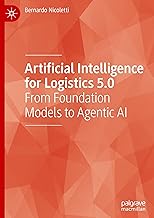
Book
Artificial Intelligence for Logistics 5.0
ISBN : 9783031940453
Author : Bernardo Nicoletti
Publisher : Springer
Year : 2025
Language : English
Type : Book
Description : There is no shortage of hype about artificial intelligence, especially in recent years. We have only begun to touch the surface of what this powerful technology can do. As technology and logistics services have become increasingly intertwined, it has become more difficult to cut through the noise and figure out what really matters. While there are already several books on AI for business in general, this title provides a tailored overview of what AI means specifically for logistics services, a highly regulated but also disruptive industry. It cuts through the hype and examines the current state of AI applications in the logistics industry, as well as the state of funding and partnerships between technology and industry companies. AI is essential to drive innovation, create efficiencies and increase productivity to capitalize on opportunities, both for established logistics companies and enterprises. However, it also carries risks and the potential for biases that will deepen systemic inequalities if responsible AI is not operationalized. Therefore, it is imperative for academics, executives, managers and logistics service provider organizations to approach AI mindfully, reflectively and responsibly so that they can make informed decisions about and with AI in their work. This book takes a detailed look at the use cases in the logistics services industry as well as the risks and opportunities. It answers pressing questions such as: How can you effectively balance innovation, customer centricity and trust with AI in the logistics industry? Can smaller companies take advantage of this solution? How can institutions use AI responsibly while mitigating potential challenges related to data bias? It will be of great interest to academics in the fields of logistics and innovation strategy as well as practitioners and policy makers.
RECOMMENDED BOOKS
Bayesian Inference: Theory, Methods, Computations
Silvelyn Zwanzig
Essentials of computer architecture
Douglas Comer
New Food Product Development : Global Strategies and Practices for Successful Innovation
Holger York Toschka
Afghanistan: A Cultural and Political History
Thomas J. Barfield
Chinese Electric Vehicle Trailblazers: Navigating the Future of Car Manufacturing
Jan Y. Yang
Industry 4.0 A Way to Achieve Occupational Health and Safety
Suchismita Satapathy
Structured Foods
Gnana Moorthy Eswaran U
Digital Strategy and Governance in Transformative Technologies
Arif Perdana