E-Book
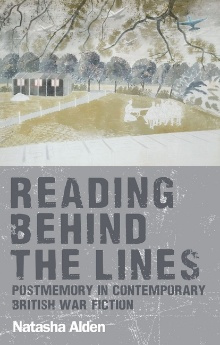
Reading behind the lines
ISBN : 9781526102607
Author : Natasha Alden
Publisher : Manchester University Press
Year : 2026
Language : English
Type : E-book
Cuncurrent Users : Unlimited
Description : Book description This study applies the concept of postmemory, developed in Holocaust studies, to novels by contemporary British writers. The first monograph-length study of postmemory in British fiction, it focuses on a group of texts about the World Wars. Building upon current work on historical fiction, specifically historiographical metafiction and memory studies, this work extends this field by exploring the ways in which the use of historical research within fiction illuminates the ways in which we remember and recreate the past.Using the framework of postmemory to consider the evolutionary development of historiographical metafiction, Alden provides a ground-breaking analysis of the nature and potential of contemporary historical fiction, and the relationship between postmemory and ‘the real’. As well as asking how postmemory can unlock the significance of the transgenerational aspects of these novels, this study also analyses how authors use historical research in their work and demonstrates, on a very concrete level, the ways in which we remember and recreate the past. Tracing the ‘translation’ of source material as it moves from historical record to historical fiction, Alden offers a taxonomy of the uses of the past in contemporary historical fiction, analysing the ways in which authors adopt, adapt, appropriate, elide, augment, edit and transpose elements found such material. Asking to what extent such writing is, necessarily metafictional, and what motivates the decisions these novelists make about their use of the past, the study offers an updated answer to the question historical fiction has always posed: what can fiction do with history that history cannot?
RECOMMENDED BOOKS
Distributed AI systems : a practical guide to building scalable training, inference, and serving systems for production AI
Fuheng Wu
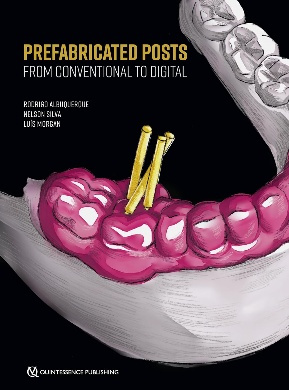
Prefabricated Posts: From Conventional To Digital
Rodrigo Albuquerque
Narratives that Change Minds: Technical Communication of Risk, Crisis, and Change
Dirk Remley
Next Generation Crop Improvement for Agricultural Sustainability and Food Security
Belaghihalli N Gnanesh
Breeding Approaches in Plantation, Spice, Medicinal and Aromatic Crops
Richa Sao
Agrostology and Agroforestry
Yamini Baghel
Biorefining Fruit Waste: Technological Advances in a Circular Bioeconomy
Parmjit S. Panesar
Castles and Colonists
Eric Klingelhofer