Book
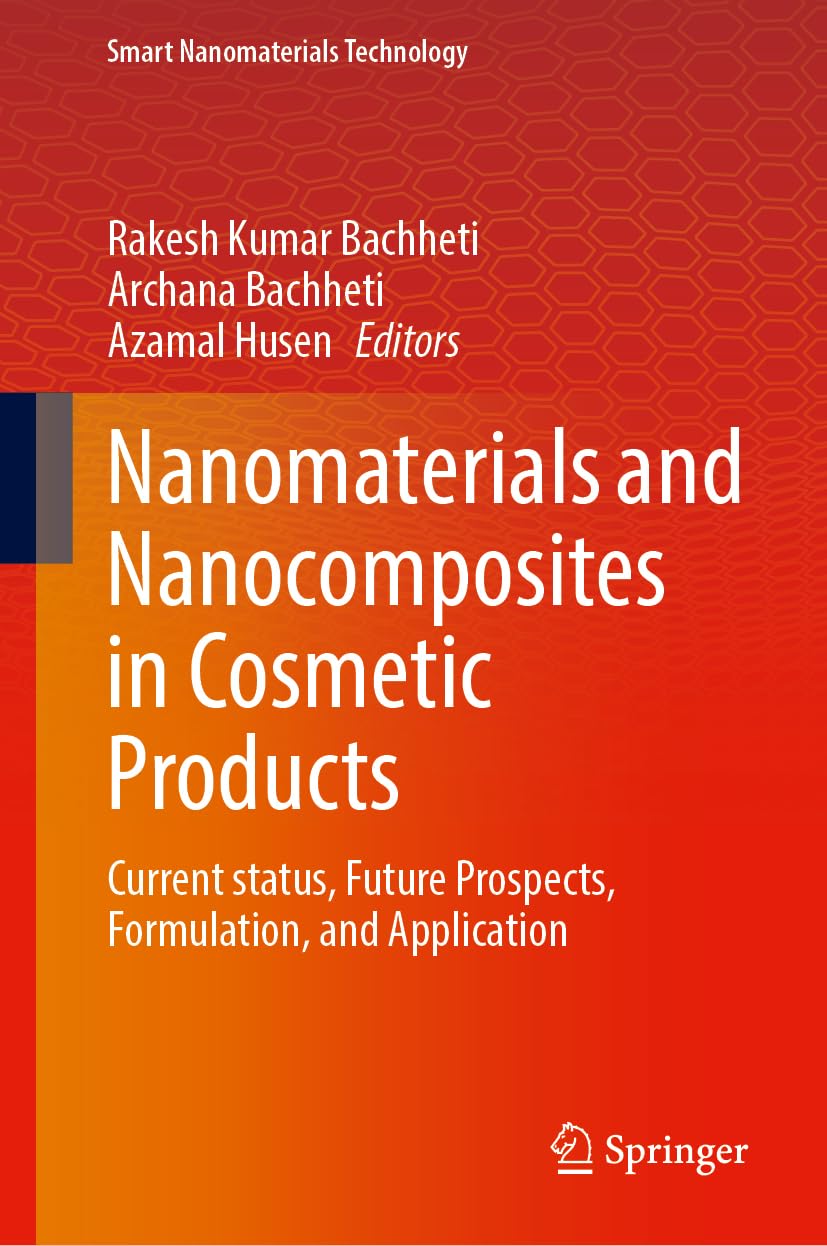
Nanomaterials and Nanocomposites in Cosmetic Products
ISBN : 9789819227969
Author : Rakesh Kumar Bachheti
Publisher : springer
Year : 2027
Language : English
Type : Book
Description : This book offers a current overview of the most recent developments and potential directions in nanotechnology, which can improve the efficacy and security of cosmetic products. The field of nanotechnology has become a game-changer with enormous potential for many industries, including the cosmetics industry. The beauty and personal care industries have undergone a revolutionary change in recent years thanks to the incorporation of nanomaterials in cosmetic compositions. By manipulating and creating materials at the nanoscale, nanotechnology is able to reveal new features and functions. The use of nanoparticles in cosmetics has created new opportunities for improving the efficacy and safety of the goods, resulting in cutting-edge and unique beauty products. When used in cosmetic formulations, nanomaterials provide a number of benefits that meet the always-changing needs of consumers. Nanomaterials give cosmetic compositions a smoother texture and improved spreadability, improving the product's sensory appeal and user experience. In sunscreens, nanoparticles like titanium dioxide and zinc oxide have demonstrated greater efficacy, offering improved protection against dangerous UV radiation without leaving a conventional white cast. The potential dangers of nanomaterials, such as skin sensitivity, cytotoxicity, and bloodstream penetration, are evaluated through thorough safety analyses. The safety profile of nanoparticles is greatly influenced by their size, shape, and stability. To reduce any negative consequences, nanomaterials must be carefully chosen and designed. The book's main topic is the use of nanomaterials in cosmetics, and it offers real-world examples to show how these materials can be successfully incorporated into a variety of cosmetic products. This book will be an important resource for experts in the field and academics who are interested in using nanotechnology in the cosmetics sector.
RECOMMENDED BOOKS

Food allergies
Roua Lajnaf
AACN Core Curriculum for Pediatric Acute and Critical Care Nursing
Margaret C.Slota
Deconstructing the Interdisciplinary Study of International Law and International Relations
Roberto Vilchez Yamato
Evidence-Based Psoriasis: Diagnosis and Treatment
Tina Bhutani

The Bloomsbury Handbook of Linguistic Landscapes
Robert Blackwood
VISTA: Minimally Invasive Tunnel Access in Oral Plastic Surgery
Homa Zadeh
Study Guide for Adult Health Nursing
Kim Cooper
Ethnoscience: Insights into Nutrition and Cultural Foundations
Tanmay Sarkar