
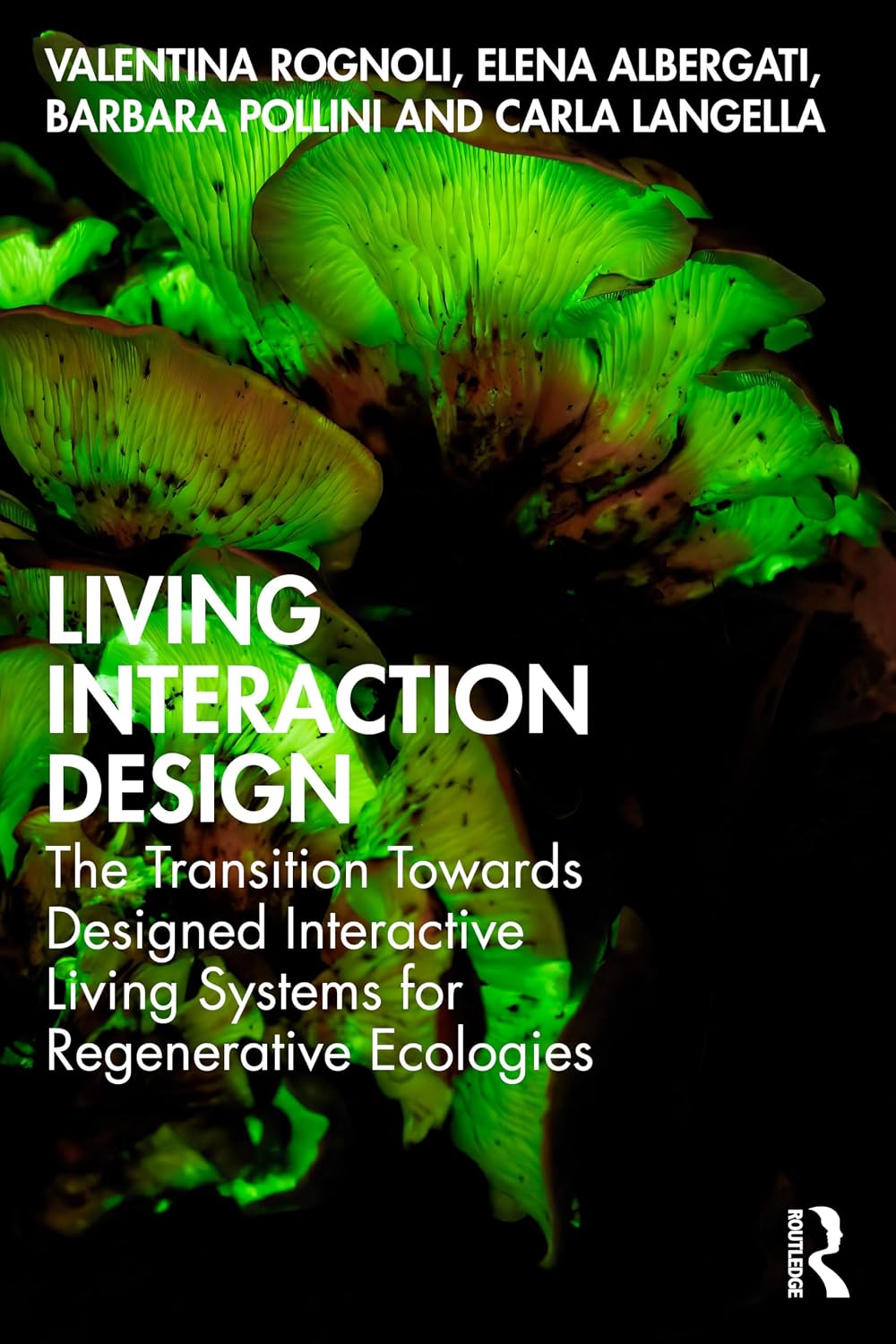
Book
Living Interaction Design: The Transition Towards Designed Interactive Living Systems for Regenerative Ecologies
ISBN : 9781032433288
Author : Valentina Rognoli
Publisher : Routledge
Year : 2026
Language : English
Type : Book
Description : Bringing together interaction design and the emerging field of biodesign, this book explores the use of living and biofabricated materials in interactive artefacts. As future products become increasingly interactive and complex, careful consideration of their environmental and ethical impacts is more important than ever. While the extraction, production and disposal of materials such as plastics and metals raises serious concerns, biological systems based on living materials offer a more promising path towards regenerative design. The book introduces the concept of Designed Interactive Living Systems (DILS), a new design paradigm in which living materials actively participate in interactions, facilitating a transition from human-centered to multispecies and more-than-human perspectives. It begins with an overview of the life cycle impacts of interactive products, covering critical phases such as raw materials, manufacturing, use, waste and the environmental, health and social impacts of materials. A wide range of illustrated case studies present solutions to these challenges, showcasing organic electronics, living technologies and living interactive products alongside analyses of existing prototypes and investigations. Finally, the book offers a series of design maps to guide future DILS developments, covering topics such as designing with microorganisms, human–non-human interaction and the role of biolabs as hybrid spaces for experimentation. Through the presentation of original research and diverse case studies, the book inspires students and designers alike to expand their knowledge and practice. It emphasizes the urgent need to transition from traditional design to biodesign and demonstrates how designers can, and must, take on this role to help shape regenerative, symbiotic futures.
RECOMMENDED BOOKS
Infinite Playgrounds
Jane Thomason

Practical primary care : fundamental strategies for the health of your patients and your practice
Vineet Nair

Institutional Elderly Care in China
Mingyang Li
Economic Geography of Tourism
João Romão

Research Data that Can Be Trusted
Michael Bouzinier
Sport and the Media
Merryn Sherwood
Advanced Optical Techniques in Biosciences
Nirmal Mazumder
Integration of Sustainable Development Goals in Water Resource Management and Agricultural Food Production
Mónica Chávez-González