
Book
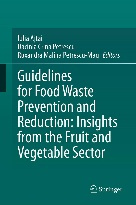
Guidelines for food waste prevention and reduction : insights from the fruit and vegetable sector
ISBN : 9783032145055
Author : Iulia Ajtai
Publisher : Springer
Year : 2026
Language : English
Type : Book
Description : In alignment with the global call to action under Sustainable Development Goal 12 (SDG 12), Target 12.3, which aims to halve per capita global food waste and reduce food losses along production and supply chains by 2030 (United Nations, 2019), efforts are being intensified worldwide to promote sustainable consumption and production practices. Guidelines for Food Waste Prevention and Reduction: Insights from the Fruit and Vegetable Sector offers a concise and urgent discussion of strategies to reduce food waste, with broader implications for agricultural sustainability, food security, health, social equity, and resource use. This brief engages a wide range of stakeholders – including farmers, retailers, processors, transporters, waste collectors, policymakers, and consumers – through interviews that interrogate inefficiencies in the food waste system. By synthesizing these diverse perspectives, the researchers develop a comprehensive definition of food waste and propose a nuanced framework for measuring it, developing reduction strategies, and outlining best practices. This collaborative approach among food chain members within the circular economy paradigm aims to increase public acceptance of food waste prevention and reduction strategies and policies, such as the adoption of abnormally shaped fruits and vegetables. Systems thinking is thus used to address gaps in policy, research, and practice and to develop guidelines that are valuable to and implementable by food system stakeholders.
RECOMMENDED BOOKS

Whaites’ Essentials of Dental Radiography and Radiology, 7th Edition
Nicholas Drage
The Clinical Encounter: A Philosophical Analysis
Mathew Mercuri

Case Files: Family Medicine
Eugene C. Toy
Chinese Grammar Analysis Issues
Lü Shuxiang
Medicinal Plants and their Bioactive Compounds in Human Health: Volume 2
Mohammad Azam Ansari
Nanotechnology in Food Packaging and Preservation
Shakeel Ahmed
Tourism and Place Design
Fredrik Hoppstadius
Introduction to Supply Chain Resilience and Viability
Dmitry Ivanov